
Men’s Bodybuilding
Required Suit
Bodybuilding Male Posing Trunks
Judging Criteria
Consists of One Round in a group comparison presentation. Judging Criteria is based on symmetry, muscularity, definition, (conditioning) and stage presence.
Round 1- Symmetry of Proportion: Definition: Correspondence in size, shape, an relative position of parts on opposite sides of a dividing line or median plan or center of axis.
Competitors will be instructed by the Head Judge to stand erect with their feet together, and arms down to their sides of their torso, shoulders and head facing directly front.
Symmetry is defined as the proportional balance of opposite body parts such as: Shoulder caps to the arms and to the calves Barrel of the chest to the quadriceps together Upper torso tapering down to the waist and hips Competitors will make quarter turns to the right on command as they are judged on overall balance, shape of their physique. Their structure should be overall aesthetically pleasing from all four sides viewed.
Round 1- Muscularity, Definition & Separation: Competitors will perform a number of mandatory poses on command of the Head Judge. The competitors will be judged on overall muscularity and size, muscle shape and fullness, and muscle density. Definition is judged on the competitor’s distinct muscular detail level that separates the different muscle groups of their physique while attaining the mass and fullness of their muscle groups. A very conditioned and very stringy runners look is NOT acceptable in this division.
Mandatory Poses
- Front Double Biceps
- Front Lat Spread
- Abdominal and Quadriceps
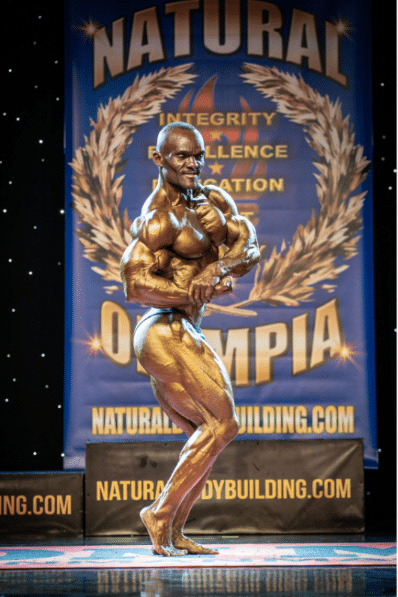
- Left Side Chest
- Left Side Triceps
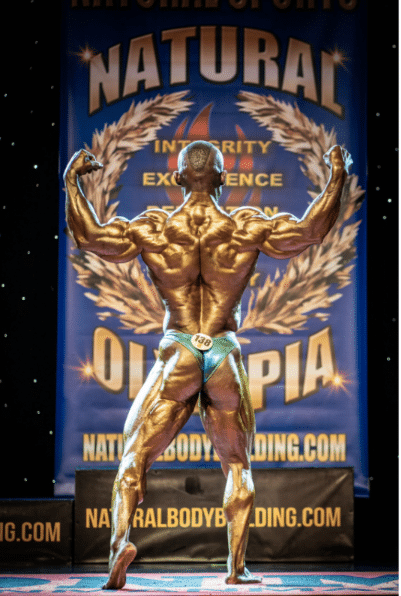
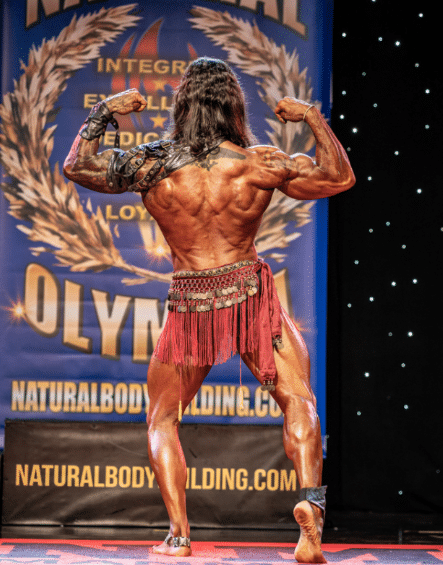
- Rear Double Biceps w/ Calf Flexed
- Rear Lat Spread w/ Calf Flexed
- Right Side Chest
- Right Side Triceps
- Hands on Hips Most Muscular
- Crab (The Hulk) Most Muscular
Individual Posing Routine
Each competitor will be allowed a maximum of 90 seconds (some events will have a time restraint of 60 seconds) to display their physique, physical conditioning, and the competitor’s overall presentation through their posing routine. The competitor to provide posing routine music at registration.USB (Universal Serial Bus) your music must be labeled and easy to find. No cell phones.
Divisions
- Kids (6-8yrs & 9-12yrs)
- Teenage (13-17yrs & 18-19yrs)
- Junior (20-23yrs)
- Jr. Masters (35+)
- Masters (40+)
- Grand Masters (50+)
- Ultra Masters (60+)
- Super Ultra Masters (70+)
- Super Platinum Masters (80+)
- Novice Men (Height Classes if permit)
- Open Men (Height Classes if permit)
- Professional (Height Classes if permit)
Mens Bodybuilding

Men’s Physique
Required Suit
Board Shorts (No Elastic Waist Band)
Judging Criteria
Consists of two rounds in a group comparison presentation. Judging Criteria is based on symmetry, muscularity, definition, (conditioning) and stage presence. Men’s Physique has less Muscular Mass than Men’s Bodybuilding. Round 1- Symmetry of Proportion: Definition: Correspondence in size, shape, and relative position of parts on opposite sides of a dividing line or center of axis. Competitors will make quarter turns to the right on command while in their “Physique Stage Stance” The lower torso is exempt from being judged. Symmetry is defined as the proportional balance of opposite body parts such as: Shoulder caps to the arms and to the calfs Barrel of the chest to the quadriceps together Upper torso tapering down to the waist and hips Round 2- Muscularity, Definition & Separation: Competitors will perform a number of mandatory poses on command of the Head Judge. (Not Allowed: Front Lat Spread, Crab Most Muscular) The competitors will be judged on overall muscularity and size, muscle shape and fullness, and muscle density. Definition is judged on the competitor’s distinct muscular detail level that separates the different muscle groups of their physique while attaining the mass and fullness of their muscle groups. A very conditioned and very stringy runners look is NOT acceptable in this division.
Mandatory Poses
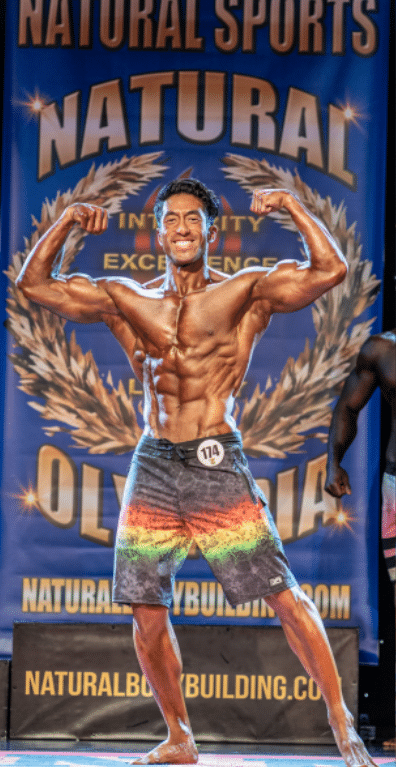
- Front Double Biceps
- Left Side Chest
- Left Side Triceps
- Left Side Intercostals
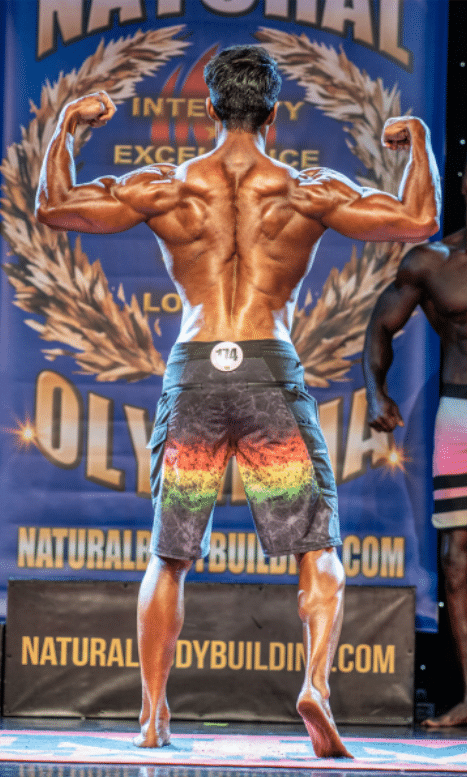
- Rear Double Biceps
- Right Side Chest
- Right Side Triceps
- Right Side Intercostals
- Abdominals
- Favorite Physique Pose
- *** NOT ALLOWED: Front Lat Spread, Crab (The Hulk) Most Muscular***
Individual Posing Routine
Perform a T-Walk OR I-Walk T- Walk: Start from the back center stage marker Walk to the front center stage marker Walk to the left stage marker Walk to the right stage marker Walk back to the center stage marker, display back pose I-Walk: Start from the back center stage marker Walk to the front center stage marker, display front and back pose ***The Back Pose is the last pose performed during T-Walk OR I-Walk*** Not following the markers on stage and the steps listed above may result in deduction of points. (The markers on stage represent the best lighting for judges and photographers)
Divisions
Teenage (13-17yrs & 18-19yrs)
Junior (20-23yrs)
Jr. Masters (35+)
Masters (40+)
Grand Masters (50+)
Ultra Masters (60+)
Super Ultra Masters (70+)
Novice Men (Height Classes if permit) Open Men (Height Classes if permit) Professional Men (Height Classes if permit)
Men’s Physique

Men’s Classic Physique
Required Suit
Classic Physique Posing Trunks/Shorts
Judging Criteria
Consists of Two Rounds: Group comparison and posing routine. Judging Criteria is based on symmetry, muscularity, definition, (conditioning) and stage presence. Round 1- Symmetry of Proportion: Definition: Correspondence in size, shape, and relative position of parts on opposite sides of a dividing line or median plan or center of axis. Competitors will be instructed by the Head Judge to stand erect with their feet together, and arms down to their sides of their torso, shoulders and head facing directly front. Competitors will make quarter turns to the right on command as they are judged on overall balance, shape of their physique. Their structure should be overall aesthetically pleasing from all four sides viewed. Symmetry is defined as the proportional balance of opposite body parts such as: Shoulder caps to the arms and to the calfs Barrel of the chest to the quadriceps together Upper torso tapering down to the waist and hips Round 1- Muscularity, Definition & Separation: Competitors will perform a number of mandatory poses and “Classic Physique” poses on command of the Head Judge. The competitors will be judged on overall muscularity and size, muscle shape and fullness, and muscle density. Definition is judged on the competitor’s distinct muscular detail level that separates the different muscle groups of their physique while attaining the mass and fullness of their muscle groups. A very conditioned and very stringy runners look is NOT acceptable in this division.
Mandatory Poses
- Front Double Biceps
- Front Lat Spread
- Abdominal and Quadriceps
- Left Side Chest
- Left Side Triceps
- Rear Double Biceps w/ Calf Flexed
- Rear Lat Spread w/ Calf Flexed
- Right Side Chest
- Right Side Triceps
- Hands on Hips Most Muscular
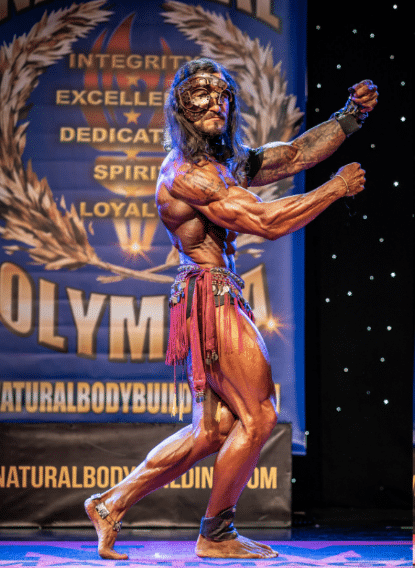
- Crab (The Hulk) Most Muscular – CLASSIC PHYSIQUE POSE –
- Twisting Back Standing/Kneeling
- Victory Symmetry Stance
- Front Pose with Vacuum
- Front or Back Pose Split Stance
Individual Posing Routine (Round 2)
Each competitor will be allowed a maximum of 90 seconds (some events will have a max of 60 seconds) Creativity and “Classic Physique” Pose(s) must be portrayed in posing routine along with presentation of physique and physical conditioning in the overall routine. Competitor to provide posing routine music at registration in a USB (Universal Serial Bus) your music must be labeled and easy to find. No cell phones.
Divisions
Jr. Masters (35+)
Masters (40+)
Grand Masters (50+)
Ultra Masters (60+)
Super Ultra Masters (70+)
Super Platinum Masters (80+)
Novice Men
Open Men
Professional Men
Men’s Classic Physique

Men’s Sports Model
Required Suit
Men’s Box Cut Swimwear No speech, props or sports themed outfits permitted.
Judging Criteria
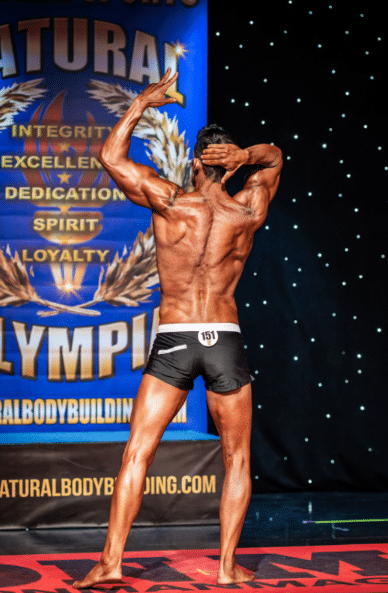
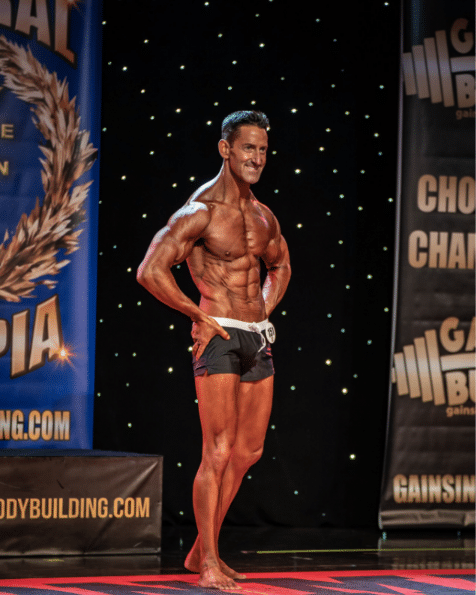
Consists of One Round Judging Criteria is based on presentation, overall suave, personality, athletic conditioned body, and marketability. Round 1- Consists of T-Walk OR I Walk. Symmetry of Proportion: Definition: Correspondence in size, shape, and relative position of parts on opposite sides of a dividing line or center of axis. Competitors will make quarter turns to the right on command.
Individual Posing
Perform a T-Walk OR I-Walk T- Walk: Start from the back center stage marker Walk to the front center stage marker Walk to the left stage marker Walk to the right stage marker Walk back to the center stage marker, display back pose I-Walk: Start from the back center stage marker Walk to the front center stage marker, display front and back pose ***The Back Pose is the last pose performed during T-Walk OR I-Walk*** Not following the markers on stage and the steps listed above may result in deduction of points. (The markers on stage represent the best lighting for judges and photographers)
Divisions
Jr. Masters (35+)
Masters (40+)
Grand Masters (50+)
Ultra Masters (60+)
Super Ultra Masters (70+)
Novice Men (Height Classes if permit) Open Men (Height Classes if permit) Professional (Height Classes if permit)
Men’s Sports Model

Men’s Beach Body
Required Suit
Board Shorts
Judging Criteria
Consists of one round in a group comparison presentation. Judging Criteria is based on an athletic/model look without the use of heavy weight training. Men’s Beach Body has less Muscle Mass than Men’s Physique. Round 1- Symmetry of Proportion: Definition: Correspondence in size, shape, and relative position of parts on opposite sides of a dividing line or center of axis. Competitors will make quarter turns to the right on command.
Individual Posing
Perform a T-Walk OR I-Walk
Divisions
Jr. Masters (35+)
Masters (40+)
Grand Masters (50+)
Ultra Masters (60+)
Super Ultra Masters (70+)
Super Platinum Masters (80+)
Novice Men
Open Novice Men
Men’s Beach Body

Men’s Fitness
Required Suit
Athletic wear or Performance wear
Judging Criteria
The judges will be looking for poise and coordination, skin tone, artistic presentation and high display of elegance, personality and glamour. In all rounds, competitors should maintain direct, but relaxed posture. Do not flex or try to emphasize muscle size. (This is not a bodybuilding division.) The judges will be looking for strength, flexibility and endurance.
Individual Posing
Competitors will present a fitness routine in active wear for a maximum of 90 seconds. They will emphasize strength, flexibility and endurance. The routines are meant to give the judges some idea of the competitor’s physical condition and abilities. It also gives the competitor the opportunity to express their creativity, personality and interests. Competitors are encouraged to include a talent or interest they may have such as dance, martial arts, jumping rope, baton, gymnastics, aerobics, etc Props may be used. Please note competitors are not expected to be gymnast. Although, routines are to be high energy which includes movements demonstrating strength, flexibility and endurance, gymnastic tumbling and/ or acrobatics is not required, and judges will not penalize competitors that do not display gymnastic ability. Judging objectives are: high level execution of movements, including full extensions. Execution of movements should appear effortless; adequate use of props of audience awareness. (This also includes audience participation and stage presence; projection of personality and creativity.
Divisions
open (open to all)
Professional
Men’s Fitness
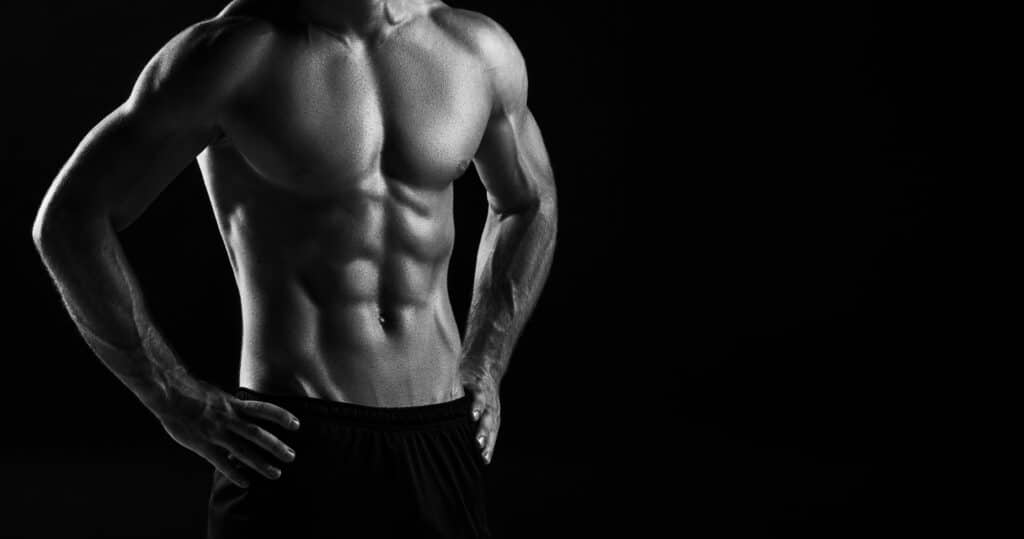
Men’s Ink / Tattoo
Required Suit
Board shorts OR Posing Trunks
Judging Criteria
Consists of One Round Judging Criteria is based on Ink/Tattoos that are visible, presentation, individuality, confidence, and composure. Round 1- Consists of T-Walk OR I-Walk, Symmetry of Proportion: Definition: Correspondence in size, shape, and relative position of parts on opposite sides of a dividing line or center of axis. Competitors will make quarter turns to the right on command. The competitor will give a 30 second speech explaining the significance of their Ink/Tattoos.
Individual Posing
Perform a T-Walk OR I-Walk T- Walk: Start from the back center stage marker Walk to the front center stage marker Walk to the left stage marker Walk to the right stage marker Walk back to the center stage marker, display back pose I-Walk: Start from the back center stage marker Walk to the front center stage marker, display front and back pose ***The Back Pose is the last pose performed during T-Walk OR I-Walk*** Not following the markers on stage and the steps listed above may result in deduction of points. (The markers on stage represent the best lighting for judges and photographers)
Divisions
Open Men
Men’s Ink / Tattoo

Body Quest Men
Required Suit
Something that complements you.
Judging Criteria
he judges will be looking for a combination of these objectives:
- Quest for your healthy fit body
- Quest for a fit and healthy Life Style
- Quest for your body transformation
- Quest to change your life forever
- Quest to look, feel and be your best!
- Quest to eliminate health issues
- Quest to your self-confidence
- Quest for your fitness goals
- Issues to Quest – Examples: Obesity Diabetes Cholesterol Rehabilitation (injury) Mental Health Physical Disabilities Pregnancy weight Low-Self Esteem A person’s transformation of their body, health and soul with the support system you design for yourself (trainer, spouse, significant other, family, friends) or all of the above.How to start your Body Quest: Submit application Tell us about your journey in 200 words or less, include a list of people that have supported and inspired your body quest. Include before and after photos and/or videoWhat we Provide – Body Quest Reveal: The platform and recognition for you to reveal – Your Body Quest! Showcase you and your Body Quest Platform Recognition Support System Achievements Emcee will announce you and your Body Quest journey, and support system You will be introduced to the stage and audience “REVEAL” You reveal the new you in your choice of attire: Sportswear, swimwear, evening wear, etc. Be creative – Makeover Have your support system at the reveal, bring signs, cheer, etc. Body Quest certificate Photos on stage with you and your support system. Description of Quarter Turns: Quarter Turn Right Head and eyes facing the same direction as the body, heels together, knees together and slightly bent, stomach in, chest out, shoulders back, left arm hanging relaxed and slightly back from the center-line of the body with a slight bend at the elbow, right arm hanging relaxed and slightly front of the center-line of the body with a slight bend at the elbow. The positioning of the arms will cause the upper body to twist slightly left with the left shoulder lowered and the right shoulder raised. Quarter Turn Back Head and eyes facing the same direction as the body, heels together, knees together and slightly bent, stomach in, chest out, shoulders back, both arms hanging relaxed and at the side along the center-line of the body, elbows slightly bent, tips of the fingers at the hips (no further than 6 inches from the body). Quarter Turn Right Head and eyes facing the same direction as the body, heels together, knees together and slightly bent, stomach in, chest out, shoulders back, right arm hanging relaxed and slightly back from the center-line of the body with a slight bend at the elbow, left arm hanging relaxed and slightly in front of the center-line of the body with a slight bend at the elbow. The positioning of the arms will cause the upper body to twist slightly right with the right shoulder lowered and the left shoulder raised. Quarter Turn Front Head and eyes facing the same direction as the body, heels together, knees together and slightly bent, stomach in, chest out, shoulders back, both arms hanging relaxed and at the side along the center-line of the body, elbows slightly bent, tips of the fingers at the hips (no further than 6 inches from the body).
Body Quest Men
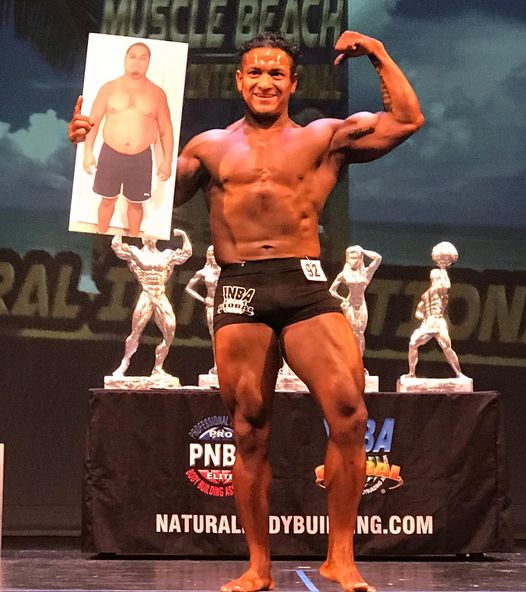
Men’s Formal Wear
Required Suit
All competitors are required to wear formal attire. Physical structure, confidence and style are being judged. No jeans. Vests are acceptable. No hats or overcoats. A well conditioned body dressed in GQ style is desired.
Judging Criteria
50%- Physique
50%- Stage Presence
Competitors will perform individual T-Walk to house music.
Competitors will perform quarter turns for comparisons.
Men’s Formal Wear
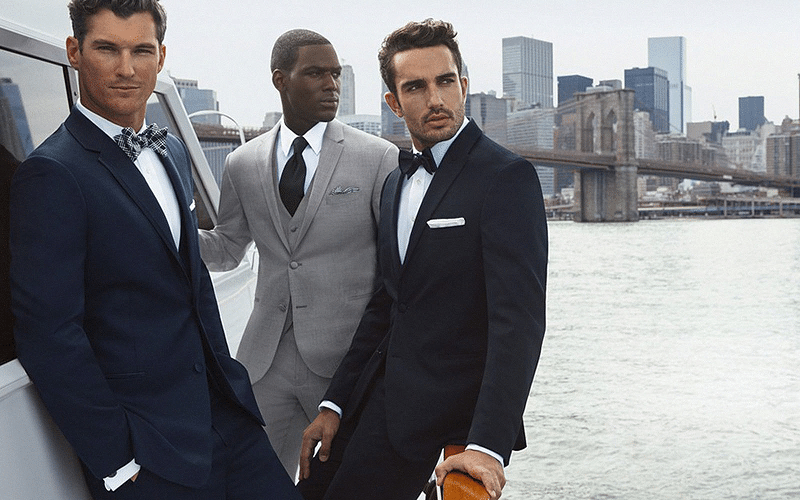
Kids & Teen Fitness
Required Suit
No Specific Outfit Required (Age Appropriate)
Judging Criteria
Consists of One Round in a group comparison presentation.
Judging Criteria is based on symmetry, athletic definition, and stage presence.
Round 1- Symmetry of Proportion: Definition: Correspondence in size, shape, and relative position of parts on opposite sides of a dividing line or center of axis.
Competitors will be instructed by the Head Judge to stand erect with their feet together, and arms down to their sides of their torso, shoulders and head facing directly front.
Competitors will make quarter turns to the right on command as they are judged on overall balance, shape of their physique. Their structure should be overall aesthetically pleasing from all four sides viewed.
Individual Posing Routine
Each competitor will be allowed a maximum of 90 seconds (some events will have a time restraint of 60 seconds) to display their flexibility, strength, and endurance. Competitors can perform any activity they have excelled in. (i.e. bodybuilding, martial arts, gymnastics, dance, aerobics, ANY fitness activity) Competitor to provide posing routine music at registration. CD in audio format.
Kids & Teen Fitness
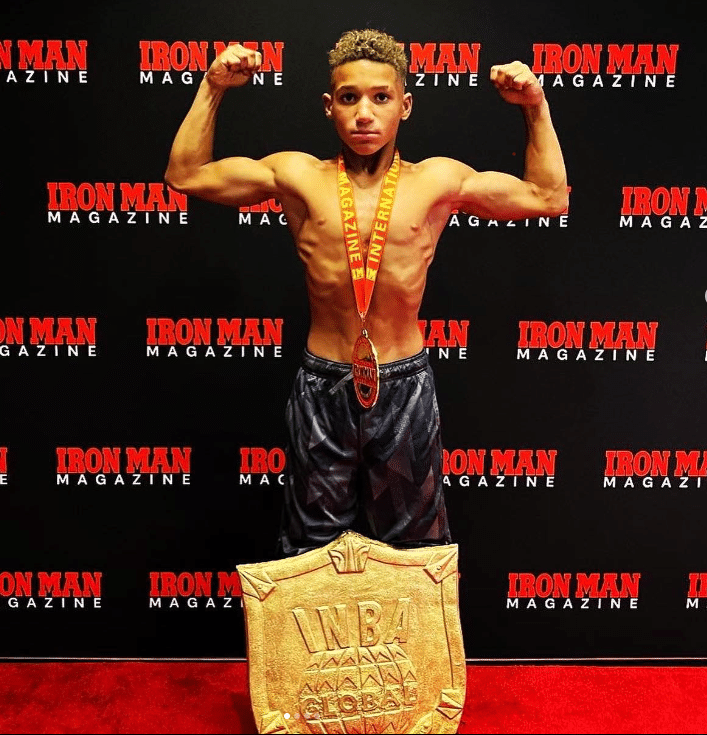
Men’s Physically Challenged Wheelchair
Required Suit
Athletic Attire (Competitors choice)
Judging Criteria
Consists of One Round in a group comparison presentation.
Judging Criteria is based on symmetry, muscularity, definition, (conditioning) and stage presence.
Round 1- Symmetry of Proportion: Definition: Correspondence in size, shape, and relative position of parts on opposite sides of a dividing line or center of axis.
Competitors will make quarter turns to the right on command as they are judged on overall balance, shape of their physique. Their structure should be overall aesthetically pleasing from all four sides viewed.
Symmetry is defined as the proportional balance of opposite body parts such as:
Shoulder caps to the arms and to the calfs
Barrel of the chest to the quadriceps together
Upper torso tapering down to the waist and hips
Round 1- Muscularity, Definition & Separation: Competitors will perform a number of mandatory poses on command of the Head Judge. The competitors will be judged on overall muscularity and size, muscle shape and fullness, and muscle density.
Definition is judged on the competitor’s distinct muscular detail level that separates the different muscle groups of their physique while attaining the mass and fullness of their muscle groups.
Mandatory Poses
- Front Double Biceps
- Front Lat Spread
- Abdominals and Quadriceps (Optional)
- Left Side Chest
- Left Side Triceps
- Rear Double Biceps
- Rear Lat Spread
- Rear Double
- Right Side Chest
- Right Side Triceps
- Hands on Hips Most Muscular
- Crab (The Hulk) Most Muscular
Individual Posing Routine
Each competitor will be allowed a maximum of 90 seconds (some events will have a time restraint of 60 seconds) to display their physique, physical conditioning, and the competitors overall presentation through their posing routine. Competitor to provide posing routine music at registration. CD in audio format.
Divisions
Open Men
Men’s Physically Challenged Wheelchair

Men’s Physically Challenged Standing
Required Suit
Bodybuilding Male Posing Trunks
Judging Criteria
onsists of One Round in a group comparison presentation.
Judging Criteria is based on symmetry, muscularity, definition, (conditioning) and stage presence.
Round 1- Symmetry of Proportion: Definition: Correspondence in size, shape, and relative position of parts on opposite sides of a dividing line or center of axis.
Competitors will be instructed by the Head Judge to stand erect with their feet together, and arms down to their sides of their torso, shoulders and head facing directly front.
Competitors will make quarter turns to the right on command as they are judged on overall balance, shape of their physique. Their structure should be overall aesthetically pleasing from all four sides viewed.
Symmetry is defined as the proportional balance of opposite body parts such as:
Shoulder caps to the arms and to the calfs
Barrel of the chest to the quadriceps together
Upper torso tapering down to the waist and hips
Round 1- Muscularity, Definition & Separation: Competitors will perform a number of mandatory poses on command of the Head Judge. The competitors will be judged on overall muscularity and size, muscle shape and fullness, and muscle density.
Definition is judged on the competitor’s distinct muscular detail level that separates the different muscle groups of their physique while attaining the mass and fullness of their muscle groups.
Mandatory Poses
- Front Double Biceps
- Front Lat Spread
- Abdominals and Quadriceps (Optional)
- Left Side Chest
- Left Side Triceps
- Rear Double Biceps
- Rear Lat Spread
- Rear Double
- Right Side Chest
- Right Side Triceps
- Hands on Hips Most Muscular
- Crab (The Hulk) Most Muscular
Individual Posing Routine
Each competitor will be allowed a maximum of 90 seconds (some events will have a time restraint of 60 seconds) to display their physique, physical conditioning, and the competitors overall presentation through their posing routine. Competitor to provide posing routine music at registration. CD in audio format.
Divisions
Open Men
Men’s Physically Challenged Standing

Mixed Pairs
Required Suit
Male: Bodybuilding Posing Trunks
Female: Bodybuilding or Bikini Suit
Judging Criteria
Consists of Two Rounds in a group comparison & posing routine. All rounds are judged.
Judging Criteria is based on the pairs symmetry, muscularity, definition, (conditioning) and stage presence.
Round 1- Symmetry of Proportion: Definition: Correspondence in size, shape, a relative position of parts on opposite sides of a dividing line or median plan or center of axis.
Symmetry is defined as the proportional balance of opposite body parts such as:
Shoulder caps to the arms and to the calfs
Barrel of the chest to the quadriceps together
Upper torso tapering down to the waist and hips
Definition is judged on the competitor’s distinct muscular detail level that separates the different muscle groups of their physique while attaining the mass and fullness of their muscle groups. A very conditioned and very stringy runners look is NOT acceptable in this division.
Competitors will be instructed by the Head Judge to stand erect with their feet together, and arms down to their sides of their torso, shoulders and head facing directly front.
Competitors will make quarter turns to the right on command as they are judged on overall balance, shape of their physique. Their structure should be overall aesthetically pleasing from all four sides viewed.
Mandatory Poses
- Front Double Biceps
- Front Lat Spread
- Abdominal and Quadriceps
- Left Side Chest
- Left Side Triceps
- Rear Double Biceps w/ Calf Flexed
- Rear Lat Spread w/ Calf Flexed
- Right Side Chest
- Right Side Triceps
- Hands on Hips Most Muscular
- Crab (The Hulk) Most Muscular
Individual Posing Routine
Each Mixed Pair will be allowed a maximum of 90 seconds (some events will have a max of 60 seconds) Creativity and Synchronized Pose(s) must be portrayed in posing routine along with presentation of physique and physical conditioning in the overall routine. Competitors to provide posing routine music at registration in a USB (Universal Serial Bus) your music must be labeled and easy to find. No cell phones.
Divisions
Open
Mixed Pairs